
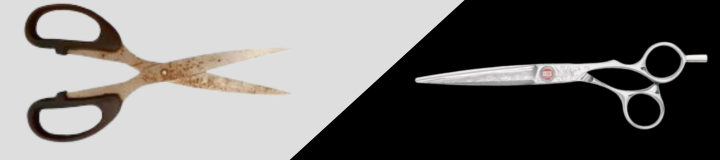
For anyone who relies on scissors or clipper blades—whether you’re a groomer, beautician, tailor, or anyone else who works with precision cutting tools—there comes a time when your trusted equipment doesn’t perform like it used to. The big question then is: should you repair it or replace it?
The Cost-Benefit of Repair
In most cases, regular sharpening and small repairs can dramatically extend the life of your tools for a fraction of the cost of buying new. Professional sharpening restores the original cutting edge, repairs minor nicks, and realigns moving parts so they work like new. Small adjustments or part replacements—such as springs, screws, or tension adjustments—are often inexpensive compared to replacing an entire pair of shears or a clipper blade.
Example:
- New high-quality shears: $200–$400+
- Professional sharpening & tune-up: $11–$32
That’s a big difference, especially if your tools are otherwise in good condition.
When Wear Patterns Can Be Fixed
Common problems like dull edges, minor chips, loose screws, or uneven tension are quick and inexpensive repairs. Even small bends in scissor blades can often be corrected by a skilled sharpener.
If your clippers or shears feel rough, pull hair, or leave uneven lines, a tune-up might be all you need.
When Corrosion is Salvageable
Surface rust or light corrosion often looks worse than it is. Many times, it can be polished away, restoring the tool’s performance and appearance.
However, if corrosion has pitted the metal deeply or eaten into the cutting edge, replacement might be the smarter or only option. A professional sharpener can assess whether the damage is purely cosmetic or if it affects function.
Signs It’s Time to Replace
While repairs can breathe new life into many tools, replacement is the better choice if:
- The blade has been sharpened so many times it’s lost its shape or length.
- The handles or body have cracked beyond repair.
- The metal is severely pitted or warped.
- Replacement parts are unavailable or cost more than a new tool.
Preventive Maintenance Saves Money
The best way to avoid premature replacement is to care for your tools daily and schedule regular professional maintenance. Visit our website for a more in-depth guide on caring for your blades, but here is a quick breakdown:
- Cleaning blades after each use to remove hair, lint, or debris.
- Oiling pivot points and clipper blades to reduce friction.
- Storing tools in a dry, padded case to prevent accidental drops or moisture damage.
- Avoiding cutting materials that your tool isn’t designed for.
- Scheduling seasonal or quarterly sharpening based on your usage.
A little daily attention can extend your tool’s life by years—saving you money and frustration.
Final Thoughts
The choice between repair and replacement isn’t always clear-cut, but in many cases, a skilled sharpener can restore your tools to peak performance for a fraction of the cost of new equipment. By investing in regular maintenance and knowing when to repair versus replace, you’ll get the most out of every pair of shears and every clipper blade you own.
If it’s time for new gear, or your tools need expert attention, select from our top brands in our store or order a mail-in kit to get your equipment back to like-new condition.
Quick Reference Guide:
Dull edges or minor chips - Repair
Loose screws or poor tension - Repair
Surface rust or light corrosion - Repair
Minor bends in blades - Repair
Deep pitting or severe rust - Replace
Cracked handles or body - Replace
Blade worn too short/thin - Replace
Replacement parts unavailable - Replace