
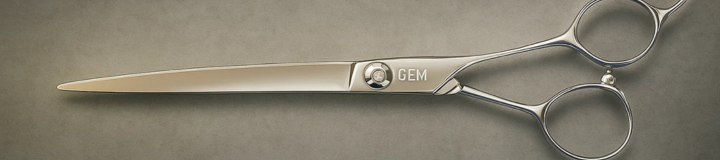
Premium shears are an investment—and like any high-performance tool, they require a different level of care than cheaper, mass-produced alternatives. Whether you’re working with Japanese honed-edge shears, high-carbon steel blades, or other high-end cutting tools, proper sharpening and upkeep are essential to preserving their precision, balance, and lifespan.
Why Premium Shears Need Special Care
Brands such as Yasaka, Sensei, and other Japanese honed-edge shears are engineered with meticulous attention to edge geometry. Their convex edges are finely polished for buttery-smooth cutting, often allowing the blades to slice through hair or fabric with minimal pressure.
Unlike entry-level shears, these edges aren’t simply “sharpened” in the traditional sense—they’re honed to maintain the original factory angle and smoothness. An inexperienced sharpener can easily:
- Flatten the convex edge into a bevel, ruining the shears’ performance.
- Remove too much material, shortening the tool’s lifespan.
- Scratch or overheat the metal, causing micro-fractures or edge warping.
The result? A premium pair of shears that no longer performs like one.
High-Carbon Steel: Why It’s Worth the Investment
While stainless steel is common in many shears, high-carbon steel is prized for its exceptional hardness and ability to hold a razor-sharp edge longer. This makes it ideal for high-precision work. However, the trade-off is that high-carbon steel is more prone to corrosion and requires attentive care. Regular cleaning, drying, and oiling are non-negotiable if you want to protect your investment.
Other blade materials you might encounter include:
- Cobalt alloys – corrosion-resistant with a smooth, lightweight feel.
- Molybdenum steel – durable and versatile for general cutting.
- Damascus steel – layered metals for strength and visual appeal (often found in luxury shears).
Why Sharpening Premium Shears Is More Complex
With cheaper shears, sharpening often involves simply grinding a new edge at a standard angle. With premium honed-edge or convex shears, the process is delicate and precise:
- Specialized equipment is required to recreate the exact convex curve.
- Polishing compounds are used to restore the edge’s smoothness, not just sharpness.
- Every pass removes a microscopic amount of material—so control and technique are crucial to preserve blade life.
Only a trained sharpener with experience in high-end shears should handle this process.
Your shears are your livelihood—treat them accordingly. Premium tools deserve premium care, and the right sharpening service will keep them performing like the day you bought them.
For expert honing of Japanese shears, high-carbon blades, and other specialty tools, trust a professional who understands their unique needs.